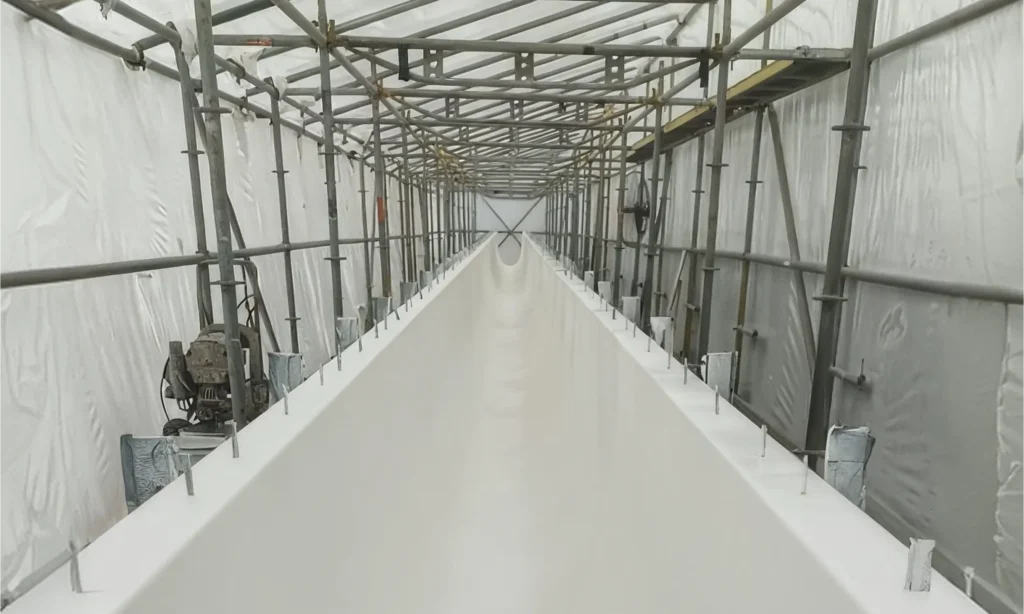
Commercial Service
Commercial
Boats with IBIX Marine Coatings
Overview of the service
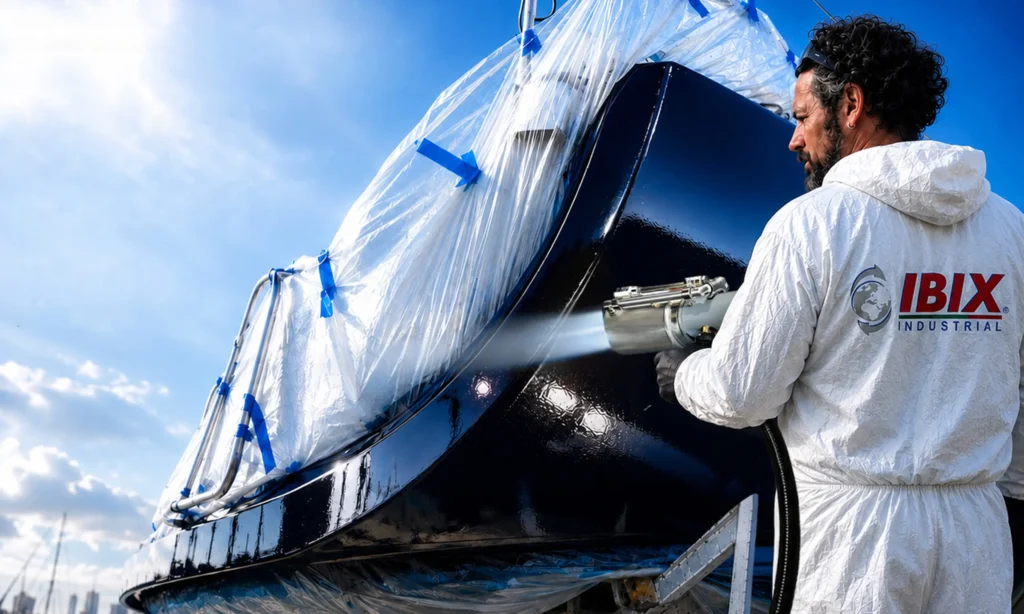
IBIX flame-spray coating technology delivers two complementary systems for marine hulls. Polyfusion for fibreglass (GRP) hulls and PHC Thermoplastic (PolyHotCote) for steel and aluminium hulls. Both are fusion-bonded, chemical-resistant, anti-osmotic, UV-stable, and tested for constant immersion in marine environments.
BlastOff Solutions provides marine coating services for commercial vessels, fishing fleets, charter and tour boats, work boats, and high-end pleasure craft across New Zealand. We match the right IBIX system to your hull substrate, prepare the surface to the appropriate standard (soda blasting for fibreglass to protect the gel-coat, sandblasting for steel and aluminium), and deliver a coating that outlasts conventional antifouling and marine paint cycles.
How we deliver IBIX
precision systems
Our IBIX process is focused on control, speed, and performance.
Project details and site constraints help us confirm the correct IBIX system and scope of work.
01
Vessel assessment to confirm hull substrate (fibreglass, steel, or aluminium)
02
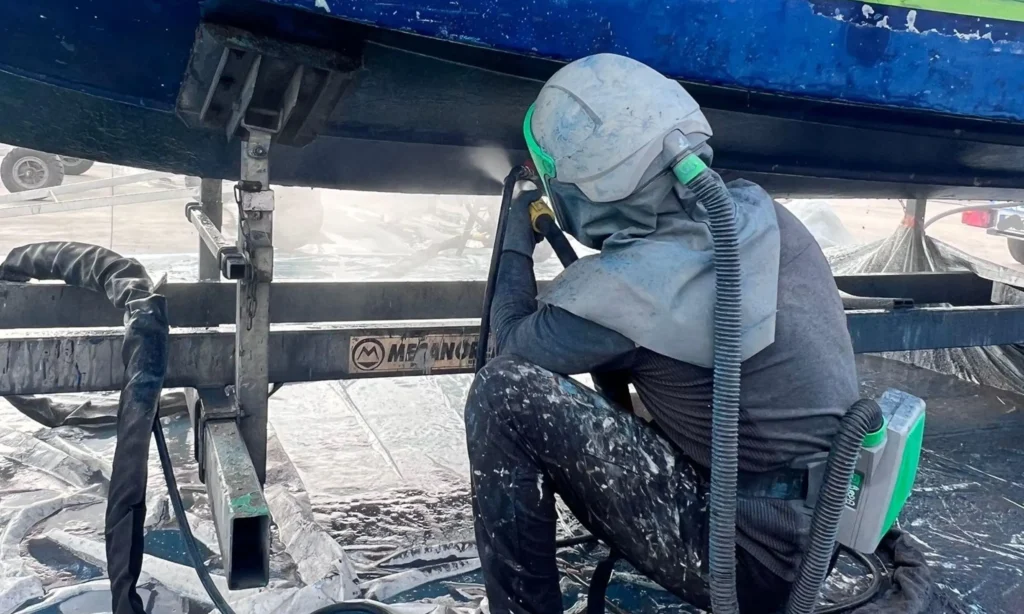
Soda blasting for fibreglass hulls. Removes antifouling and old paint without damaging the gel-coat
03
Sandblasting (NZS / AS 1627.4 Sa 21⁄2) for steel and aluminium hulls, back to clean, profiled metal
04
Hull inspection. Blisters, osmosis, corrosion, and laminate damage repaired before coating
05
Solvent wipe-down to remove residual contaminants and salt
Why IBIX for Marine ®
Traditional marine coatings. Antifouling, two-pack epoxy, polyurethane, require multiple coats, long cure windows, and annual or biennial recoating. Each haul-out, slip rental, and downtime cycle is lost revenue and lost water time.
IBIX flame-spray technology replaces this cycle with a single fusion-bonded thermoplastic membrane. It does not chip, peel, or crack; it resists chlorinated and saltwater immersion; it carries no VOCs; and it is field-repairable with a heat source. The vessel is back in the water in days, with a coating designed to last many years between maintenance cycles.
Performance Advantage
IBIX flame-spray coatings are engineered for constant immersion in saltwater and freshwater marine environments, with the chemical, mechanical, and UV resistance demanded by commercial and recreational vessel owners across New Zealand.
01
Resistant to constant saltwater and freshwater immersion
02
Salt spray (ASTM B117): <10 mm adhesion loss after 1000 h on steel
03
Outstanding UV resistance, no chalking or colour breakdown
04
Anti-osmotic vapour barrier, eliminates fibreglass blistering
05
Excellent flexibility (>500% elongation) accommodates hull flex
06
Field-repairable in-situ with a heat source, no full recoat needed
Ideal Applications
Commercial and recreational marine vessels across New Zealand. Fibreglass pleasure craft, aluminium fishing boats and trailer boats, steel commercial fleets, tugs, barges, and tour vessels. Where long-life chemical, UV, and immersion resistance combined with minimal downtime is required.
01
Constant saltwater immersion resistance
02
Anti-osmotic protection for fibreglass hulls (no blistering)
03
Salt spray and corrosion resistance for steel/aluminium hulls
04
UV stability and colour retention across NZ marine climate
05
Compatible with fibreglass (GRP), steel, and aluminium
How a boat hull is built
A boat hull isn’t a single material, it’s a stack of layers, each doing a different job. Knowing the stack matters because the right surface preparation method is the one that strips back to the right layer without damaging what’s beneath. The wrong method destroys the hull’s primary waterproofing in the process.
Layer 1
Fibreglass laminate
The structural body of the hull. Woven fibreglass cloth saturated with polyester or vinylester resin, built up in multiple layers. Strong, but porous on its own. Water will
slowly migrate in if not sealed.
Layer 2
Gel-coat
Applied first into the mould, so it ends up on the outside of the finished hull. A thick, pigmented polyester layer (around 0.5–0.8 mm) that seals the laminate against water ingress AND provides the smooth, glossy cosmetic finish. A new boat is shiny because of the gel-coat, there is no paint underneath.
Layer 3
Epoxy barrier coat
An optional anti-osmotic defence below the waterline, usually 4–5 coats of epoxy painted over the gel-coat. Not always present on new boats; commonly added during the first major refit, or after osmotic blister repairs.
Layer 4
Antifouling paint
The outermost layer below the waterline. Soft, sacrificial, and designed to stop marine growth (barnacles, weed, slime). Releases biocides as it wears down. Recoated every 1–2 years; builds up in lumpy old layers over
decades.
Why surface prep depends on substrate
Fibreglass (GRP) → SODA BLAST
Soda crystals explode on contact, lifting antifouling and barrier coat.
Gel-coat is harder than the paint above it, so the blast naturally stops
at the gel-coat — leaving the hull’s primary waterproofing intact.
Steel / Aluminium → SANDBLAST
Metal hulls have no fragile substrate to protect, so abrasive blasting strips antifouling and primer back to clean profiled metal (AS 1627.4 Sa 21⁄2). PHC thermoplastic then flame-bonds directly to the prepared surface.
Never sandblast a fibreglass hull.
Sand is harder than gel-coat. It pits straight through the hull’s waterproofing into the laminate. Soda is the only safe blast medium for fibreglass.
Tested & Proven
IBIX Polyfusion® and PHC® thermoplastic coatings are supported by
independent testing and international performance benchmarks, including
ASTM B117 (salt spray, >1000 h), ASTM D2794 (impact), ASTM D4060
(abrasion), ASTM G53 (weathering), DIN 51130 (slip resistance), pull-off
adhesion testing, and ISO / IEC methodologies. Both systems are also
approved for drinking water and food contact.
IBIX Flame-Spray vs Traditional Marine Coatings
IBIX coatings offer clear advantages over conventional antifouling and marine paint systems, particularly for vessels that need long service life with minimal haul-out and downtime cycles.
Feature
Service life
Return to service
UV resistance
Saltwater immersion
Flexibility
Anti-osmotic barrier
Impact resistance
Field repairability
VOCs / fumes
IBIX Polyfusion® (Thermoplastic)
Many years
Single durable installation
Single durable installation
Days, not weeks
Hull can be launched rapidly
Hull can be launched rapidly
Excellent
No chalking after 2000 h weathering
No chalking after 2000 h weathering
Excellent
Tested >1000 h salt spray
Tested >1000 h salt spray
Very high elasticity
(>500% elongation)
(>500% elongation)
Yes
Eliminates fibreglass blistering
Eliminates fibreglass blistering
2.7 J / 18 J
Absorbs impact without chipping
Absorbs impact without chipping
Yes
Re-melted and fused with a heat source
Re-melted and fused with a heat source
None
Solvent-free, no hazardous fumes
Solvent-free, no hazardous fumes
Epoxy Coatings
Antifouling: 12–24 months
Recoat required
Recoat required
Days to weeks depending on cure schedule
Poor to moderate
Fades under UV
Fades under UV
Moderate
Degrades with salt over time
Degrades with salt over time
Low
Brittle, prone to cracking
Brittle, prone to cracking
No
Vapour drive causes blisters
Vapour drive causes blisters
Brittle — chips and cracks
on impact
on impact
Requires haul-out,
sand back & recoat
sand back & recoat
Solvent-based
fumes during cure
fumes during cure
Polyurea / PU Coatings
Two-pack epoxy: 3–5 years Recoat required
5–7 days minimum cure before launch
Good
Some chalking over time
Some chalking over time
Good
System dependent
System dependent
Low to moderate
Can crack with hull flex
Can crack with hull flex
Partial
Reduces but does not eliminate
Reduces but does not eliminate
Good
Requires sand back & recoat
Low to moderate VOC
Service life
IBIX Polyfusion® (Thermoplastic)
Many years
Single durable installation
Single durable installation
Epoxy Coatings
Antifouling: 12–24 months
Recoat required
Recoat required
Polyurea / PU Coatings
Two-pack epoxy: 3–5 years Recoat required
Return to service
IBIX Polyfusion® (Thermoplastic)
Days, not weeks
Hull can be launched rapidly
Hull can be launched rapidly
Epoxy Coatings
Days to weeks depending on cure schedule
Polyurea / PU Coatings
5–7 days minimum cure before launch
UV resistance
IBIX Polyfusion® (Thermoplastic)
Excellent
No chalking after 2000 h weathering
No chalking after 2000 h weathering
Epoxy Coatings
Poor to moderate
Fades under UV
Fades under UV
Polyurea / PU Coatings
Good
Some chalking over time
Some chalking over time
Saltwater immersion
IBIX Polyfusion® (Thermoplastic)
Excellent
Tested >1000 h salt spray
Tested >1000 h salt spray
Epoxy Coatings
Moderate
Degrades with salt over time
Degrades with salt over time
Polyurea / PU Coatings
Good
System dependent
System dependent
Flexibility
IBIX Polyfusion® (Thermoplastic)
Very high elasticity
(>500% elongation)
(>500% elongation)
Epoxy Coatings
Low
Brittle, prone to cracking
Brittle, prone to cracking
Polyurea / PU Coatings
Low to moderate
Can crack with hull flex
Can crack with hull flex
Anti-osmotic barrier
IBIX Polyfusion® (Thermoplastic)
Yes
Eliminates fibreglass blistering
Eliminates fibreglass blistering
Epoxy Coatings
No
Vapour drive causes blisters
Vapour drive causes blisters
Polyurea / PU Coatings
Partial
Reduces but does not eliminate
Reduces but does not eliminate
Impact resistance
IBIX Polyfusion® (Thermoplastic)
2.7 J / 18 J
Absorbs impact without chipping
Absorbs impact without chipping
Epoxy Coatings
Brittle — chips and cracks
on impact
on impact
Polyurea / PU Coatings
Good
Field repairability
IBIX Polyfusion® (Thermoplastic)
Yes
Re-melted and fused with a heat source
Re-melted and fused with a heat source
Epoxy Coatings
Requires haul-out,
sand back & recoat
sand back & recoat
Polyurea / PU Coatings
Requires sand back & recoat
VOCs / fumes
IBIX Polyfusion® (Thermoplastic)
None
Solvent-free, no hazardous fumes
Solvent-free, no hazardous fumes
Epoxy Coatings
Solvent-based
fumes during cure
fumes during cure
Polyurea / PU Coatings
Low to moderate VOC
Enquire about
IBIX technology
If your site requires fast, durable protection without downtime, IBIX may be the right solution. Get in touch with BlastOff Solutions to discuss your application, operational constraints, and performance requirements. Our team can advise whether IBIX technology is suitable for your project.