Southern Spars
Superyacht Hull Blasting and Protective Coating
LOCATION
SERVICE
The Challenge
Built from cold-rolled steel, the superyacht hull needed a specific surface profile established before any coating could be applied, since the mill finish on cold-rolled steel is not suitable for direct coating. Getting this preparation stage right mattered because the hull was moving into production, and the coating system’s performance would depend on the quality of the surface profile beneath it.
Our Approach
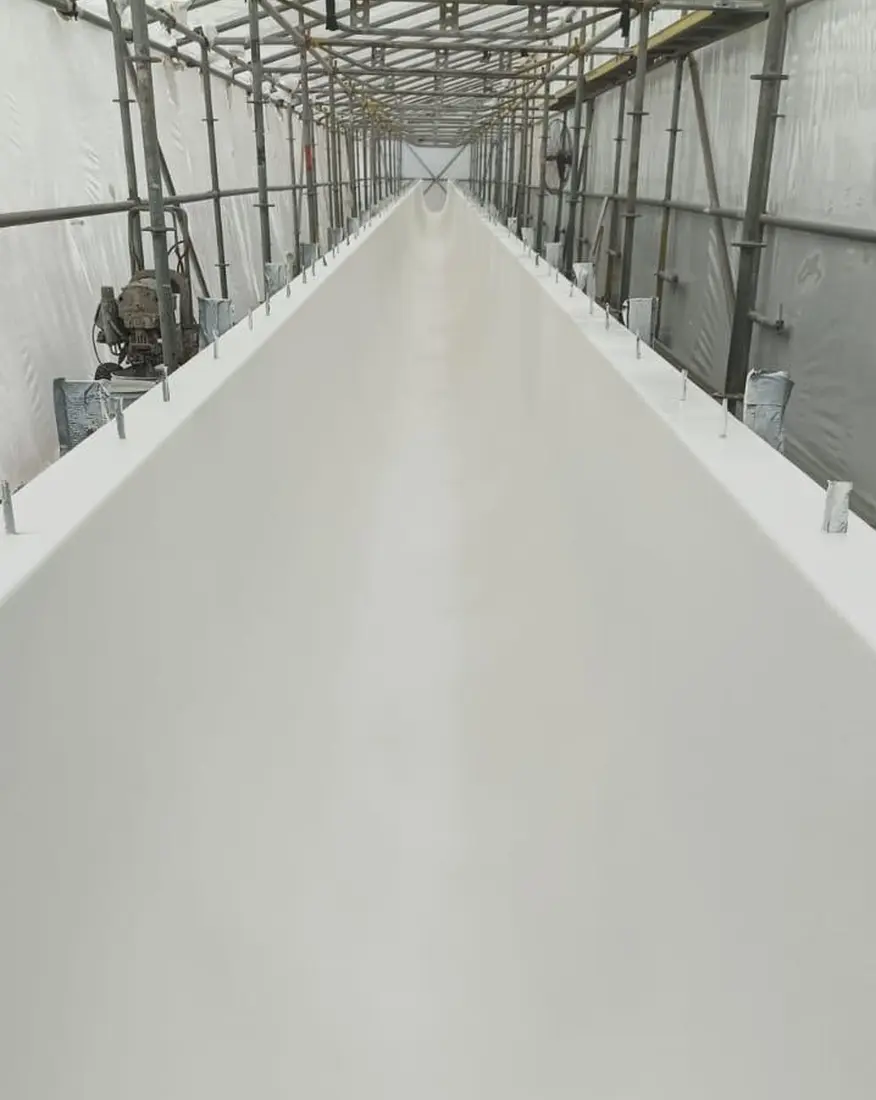
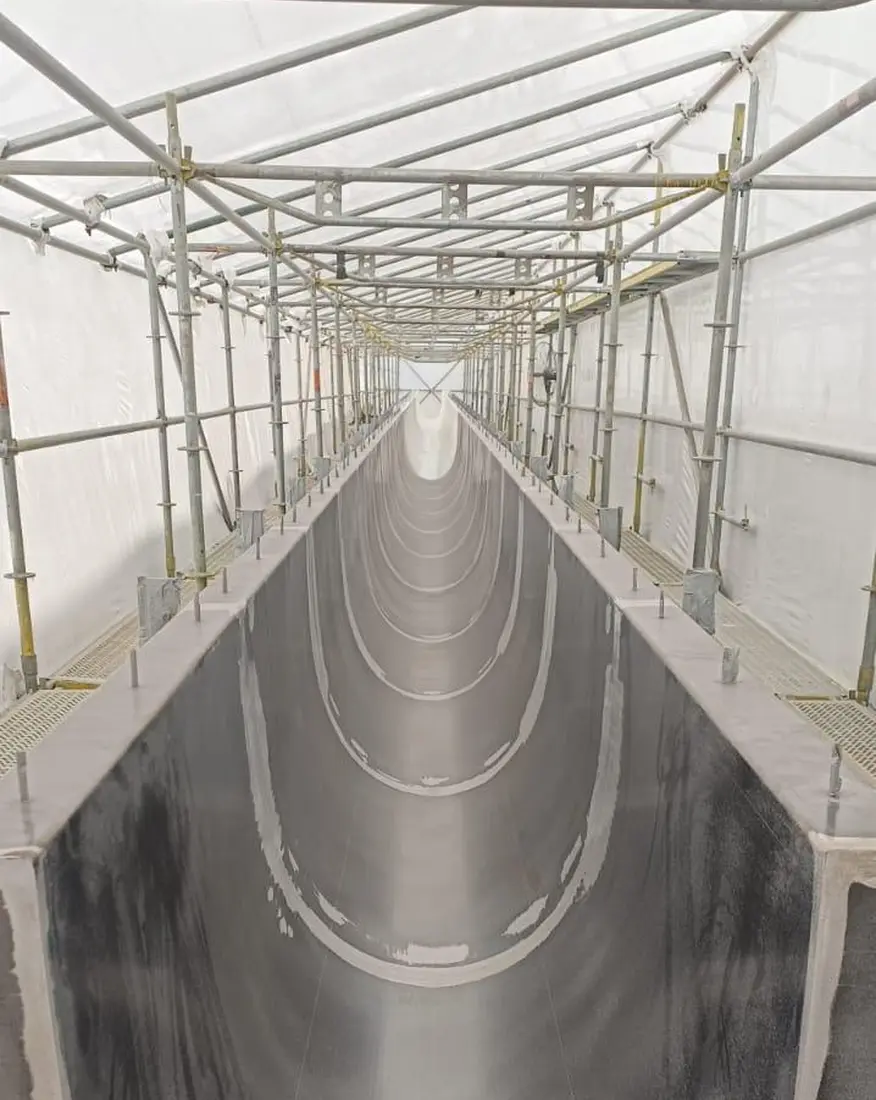
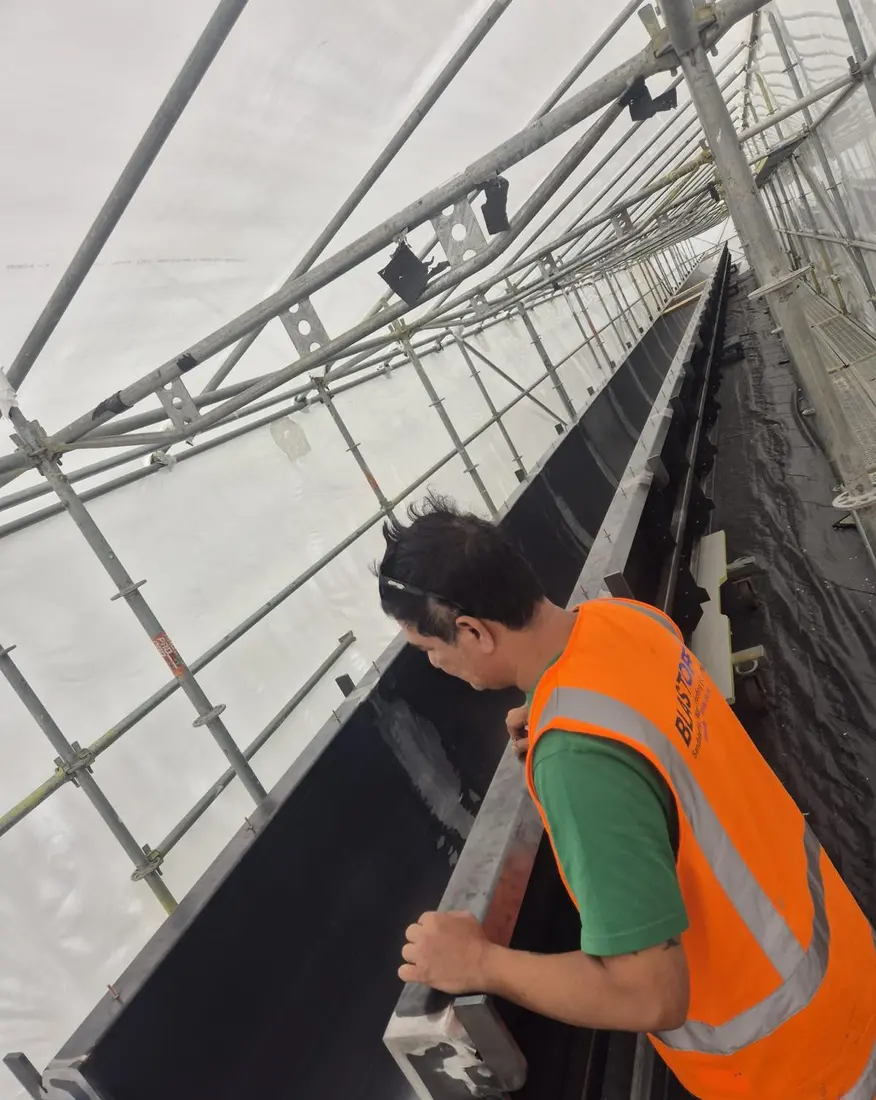
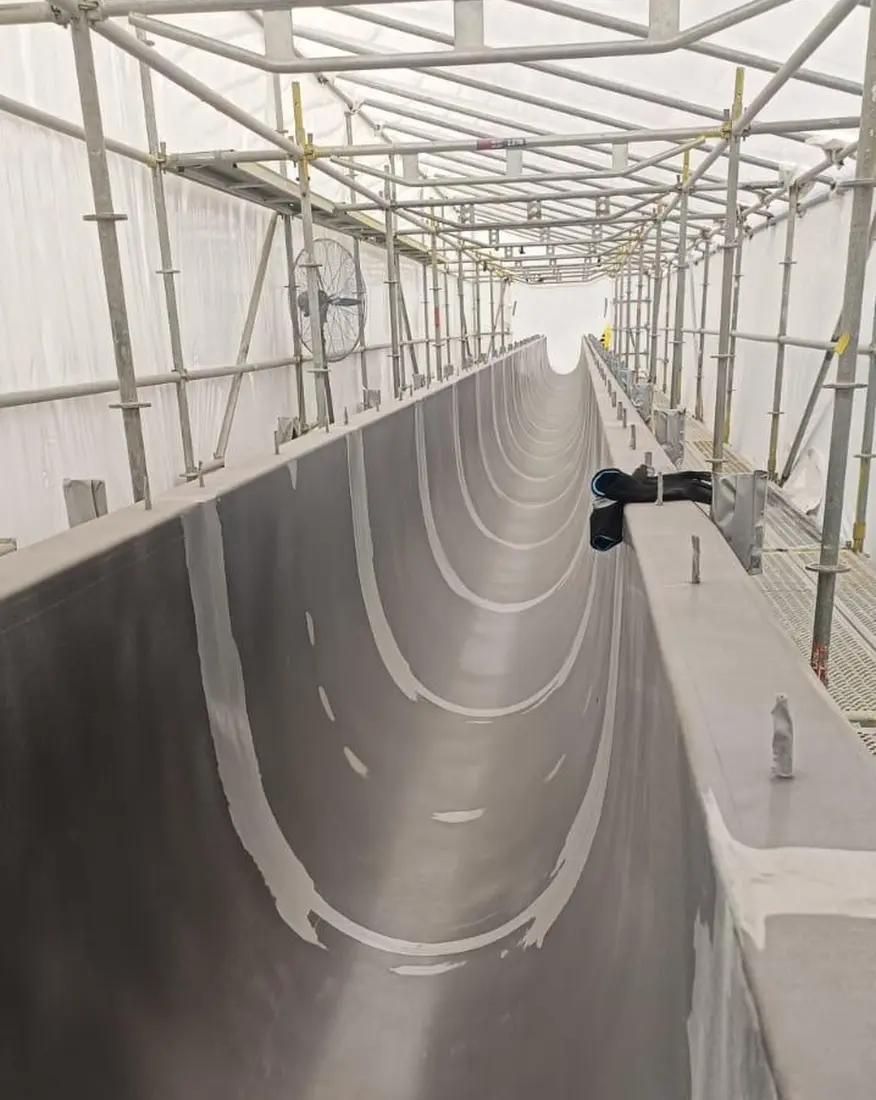
BlastOff abrasive blasted the hull to achieve the anchor profile specified for the coating system, working across the cold-rolled steel to create a consistent surface texture suited to marine coating adhesion. The blasting was carried out ahead of the hull entering production, ensuring the surface was ready at the point the protective coating system needed to be applied for optimum long-term performance.
The Outcome
The superyacht hull received the surface profile required for the protective marine coating system to be applied with confidence in its adhesion. Southern Spars was able to move the hull into production with a coating system designed to achieve its rated service life on the prepared steel.
Preparing a Superyacht Hull for Its Marine Coating System at Southern Spars
Before a superyacht hull can carry a marine coating system built to last, the steel beneath it has to be prepared to a standard that mill-finished, cold-rolled steel simply does not arrive at. That was the starting point for the hull worked on at Southern Spars in Avondale, where the cold-rolled steel construction meant a specific surface profile had to be established before the vessel could move into production and receive its protective coating system.
BlastOff abrasive blasted the hull to achieve the anchor profile the coating system required, working across the steel to create a consistent surface texture suited to marine coating adhesion. This stage of preparation matters because a coating applied over an inadequate profile will not bond as designed, and on a vessel headed into production there is little opportunity to revisit the substrate once the build has moved on. The marine coating that follows can only perform to its rated service life if the surface beneath it was blasted correctly, which is why boat builders and fabricators working with cold-rolled or previously uncoated steel should treat surface profile as a specification item in its own right, not an assumed step.
A proper scoping conversation for a comparable hull should cover the steel’s condition and finish, the profile required by the coating manufacturer, and how blasting will be sequenced against the build programme. For Southern Spars, that preparation gave the hull a surface ready for its coating system to be applied with confidence as it entered production. Timing also matters on a build programme like this, since blasting needs to happen close enough to coating application that the freshly profiled steel does not have time to pick up surface contamination or flash rust before the system goes on.
Testimonials
Project Images
Clients value our reliability, communication, and the quality of our work.
Posted on GoogleTrustindex verifies that the original source of the review is Google. Damian came promptly, explained the process clearly and gave us a quote. The work was done professionally and Damian was available and easily contactable throughout. His team were great to deal with and completed the internal waterproofing of our garage and rumpus room. We were very happy with the result. N BrightPosted on GoogleTrustindex verifies that the original source of the review is Google. Awesome work by Blastoff Solutions. Damien was a pleasure to deal with. Got back promptly to any queries and questions. Offering both a cost effective and practical solution to our needs. Work carried out to a high standard. Highly recommend.Posted on GoogleTrustindex verifies that the original source of the review is Google. Damian is a good communicator and the job was done to a good standard by his team. Thank you.Posted on GoogleTrustindex verifies that the original source of the review is Google. Our rental property is concrete block unit and we had leakage from one of the wall of lounge. Danial of this company visited and and gave satisfying answers to my questions and after accepting the quote the work was done to my satisfaction.Posted on GoogleTrustindex verifies that the original source of the review is Google. Good communication and did a great job. Estimated cost was very accurate.Posted on GoogleTrustindex verifies that the original source of the review is Google. Coming to the rescue, getting the job done in time! With amazing results! Very impressed, thank youPosted on GoogleTrustindex verifies that the original source of the review is Google. My deck looks like new again, thanks to Blastoff Washing team!Verified by TrustindexTrustindex verified badge is the Universal Symbol of Trust. Only the greatest companies can get the verified badge who has a review score above 4.5, based on customer reviews over the past 12 months. Read more
Ready to get started?
Planning crane or port maintenance? Talk to BlastOff.