Commercial Service

Commercial
Waterproofing

Overview of the service

Waterproofing protects foundations, retaining walls, basements, and subfloor areas from water ingress and moisture damage. Below ground, above ground, and internally. Uncontrolled moisture causes concrete deterioration, reinforcement corrosion, dampness, and mould.

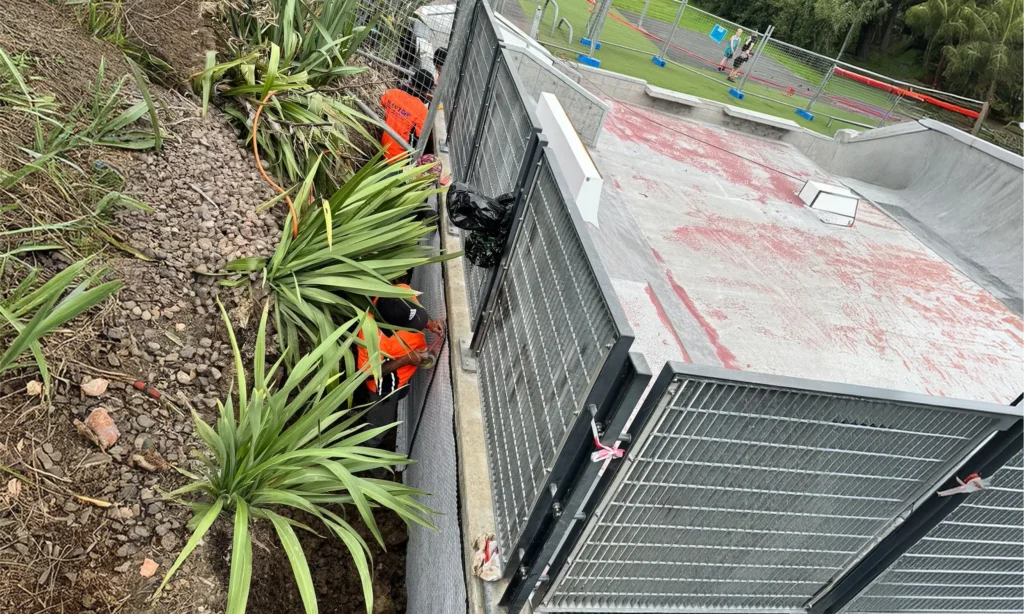
Below ground, BlastOff Solutions installs external moisture barriers, a 4mm SBS torch-on membrane, protection board, drainage scoria, and a Novacoil subsoil drain to stormwater or a sump and pump, then scoria backfill. Internally, we apply cementitious and crystalline systems carried onto the floor at wall junctions. Every system meets NZBC Clause B2 (Durability) and Clause E2 (External Moisture), preventing leaks, dampness, and long-term
structural damage.

Types of Waterproofing Systems Used

We select and apply the right waterproofing system for the substrate, location, and water exposure. Below ground, above ground, and internally. Project specifications and manufacturer data sheets confirm the correct product, application method, and film thickness required.

01
Below-ground tanking using a 4mm SBS torch-on membrane applied to the positive face of basement and retaining walls, with protection board prior to backfill
02
Cementitious and crystalline waterproofing for negative-side application to basements, lift pits, and concrete water tanks
03
Subsoil drainage using Novacoil drainage coil connected to stormwater or a sump and pump, with free-draining scoria backfill and geotextile filter cloth
04
Above-ground membrane systems. Torch-on, liquid-applied, and sheet membranes to decks, balconies, podiums, and planter boxes
05
Wet area membranes to AS/NZS 4858 for internal wet areas, plant rooms, and service spaces

How we waterproof
below-ground walls

Our process targets the source of the moisture, outside the wall, with a code-compliant tanking system designed for the life of the building. Every project is assessed on site before quoting, so you know exactly what the work involves and what it will cost.

01
Excavate along the wall to footing level
02
Prepare and prime the wall surface
03
4mm SBS torch-on membrane applied
04
Protection board, drainage scoria, Novacoil drain
05
Scoria backfill and surface reinstatement

How we waterproof internal walls

Each project follows the same five-step process to give a lasting, watertight result.

01
Coating removal
Existing coatings are ground back using a grinder paired with a HEPA filter vacuum for dust-free removal.
02
Crack remediation
Cracks are repaired with epoxy mortar, with coving installed at the wall-to-floor interface.
03
Structural injection
Structural cracks are filled to full depth using polyurethane (PU) injection.
04
Patch repairs
PU or cement epoxy is used to patch and fair up the wall surface, ready for waterproofing.
05
Waterproofing applied
The system is applied to the wall and carried 100mm onto the floor to seal the weak pressure point at the junction.

Capabilities and Equipment

We operate with professional-grade waterproofing systems and application equipment.

Capabilities

Below-ground tanking installation with subsoil drainage, scoria backfill, and protection board to manufacturer and NZBC E2 requirements
Wet film and dry film thickness measurement and verification on liquid-applied membranes against manufacturer specifications
Substrate moisture testing and surface preparation prior to membrane and cementitious application

Equipment

Surface preparation equipment for concrete profiling and substrate preparation prior to membrane and coating application
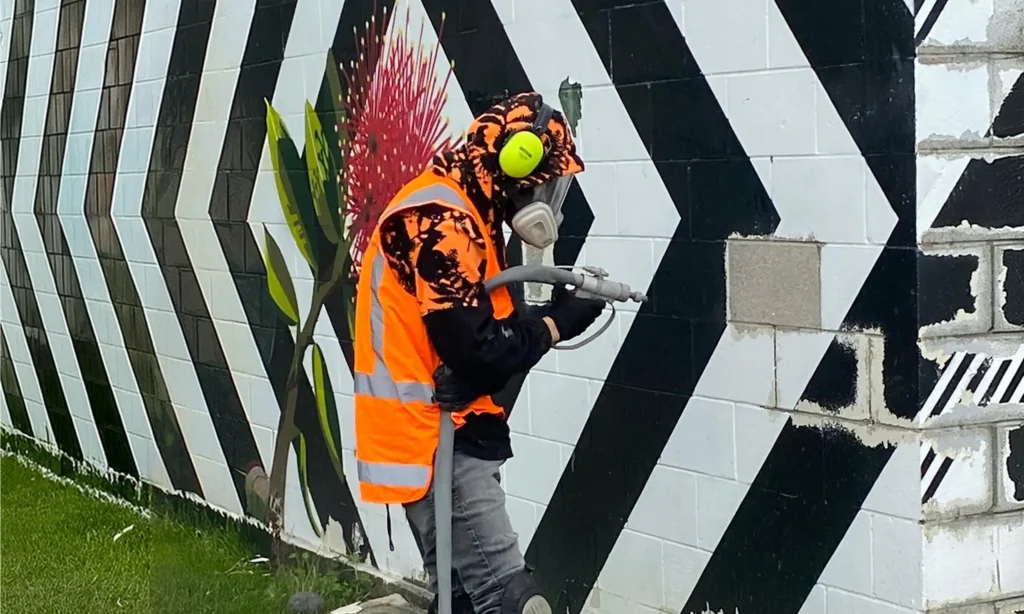
Spray and trowel application equipment for liquid-applied and cementitious waterproofing systems
Wet and dry film thickness gauges, and flood and leak test equipment for membrane verification
Where this service is used

Commercial waterproofing is commonly required for:
01
Basements, lower levels, and below-ground structures
02
Retaining walls, lift pits, water tanks, and plant rooms
03
Concrete block, brick, and masonry buildings with damp or mould
04
Older or pre-2000s buildings with failed coatings or no waterproofing
05
Decks, podiums, planter boxes, and internal wet areas

Frequently asked questions

How do I know if I need below-ground waterproofing?

Sealing the inside of a wall only treats the symptom, not the source. Water and hydrostatic pressure from the surrounding ground keep pushing against the wall and eventually cause internal coatings to fail. Waterproofing from the outside stops water before it reaches the structure. In line with the principles of NZBC E2, and far more durable long term.

What does the work actually involve?

Below ground, we excavate to footing level, prime the wall, apply a 4mm SBS torch-on membrane, then install protection board, drainage scoria and a Novacoil drain to stormwater or a sump and pump before backfilling with scoria. Internally, we grind back coatings, repair and inject cracks, fair up the wall, and apply the system carried onto the floor at the junction.

How is excavation handled on a constrained or live site?

Excavation method and plant are matched to access. On tight or operational sites we stage the work in sections, use compact plant or hand excavation where needed, and coordinate around site traffic and ongoing building use to keep disruption to a minimum.

Will surrounding hardstand, landscaping, or access be affected?

Any paving, landscaping or hardstand within the excavation zone is lifted and reinstated as part of the scope. We confirm what is affected, and how it will be reinstated, before work begins.

How long does it take, and can the building stay in use?

Programme depends on wall length, depth, access, and the system specified, and is confirmed at quoting. Work is generally staged so the building can stay in use, with any access or services impacts agreed in advance.

What does it typically cost, and what affects the price?

Cost is driven by wall length and depth, excavation access, ground and water conditions, the membrane and drainage system specified, and reinstatement. Every project is assessed on site and priced to the specific scope before work begins.

What's the warranty, and what happens if it leaks again?

Work is backed by manufacturer product warranties and BlastOff workmanship warranties, with a PS3 producer statement provided where required. If a covered issue arises within the warranty period, we return to inspect and rectify it.

Can waterproofed walls be painted, plastered, or finished?

Yes. Internally waterproofed walls can be painted, plastered or otherwise finished to suit. Depending on the system selected the surface may have a slightly different texture, and waterproofing protects the structure without affecting its integrity.

Enquire about
Waterblasting

If your site requires fast, durable protection without downtime, IBIX may be the right solution. Get in touch with BlastOff Solutions to discuss your application, operational constraints, and performance requirements. Our team can advise whether IBIX technology is suitable for your project.