East Tamaki Warehouse
Laser Cleaning and Re-Coating
LOCATION
SERVICE
The Challenge
Corrosion needed to be stopped on the structural steel, but the warehouse operation running beneath the work area could not be halted to accommodate the repair. Any method that required extensive masking, wet processes or a lengthy shutdown risked interrupting the business below, so the corrosion had to be addressed in a way that fit around continuing operations.
Our Approach
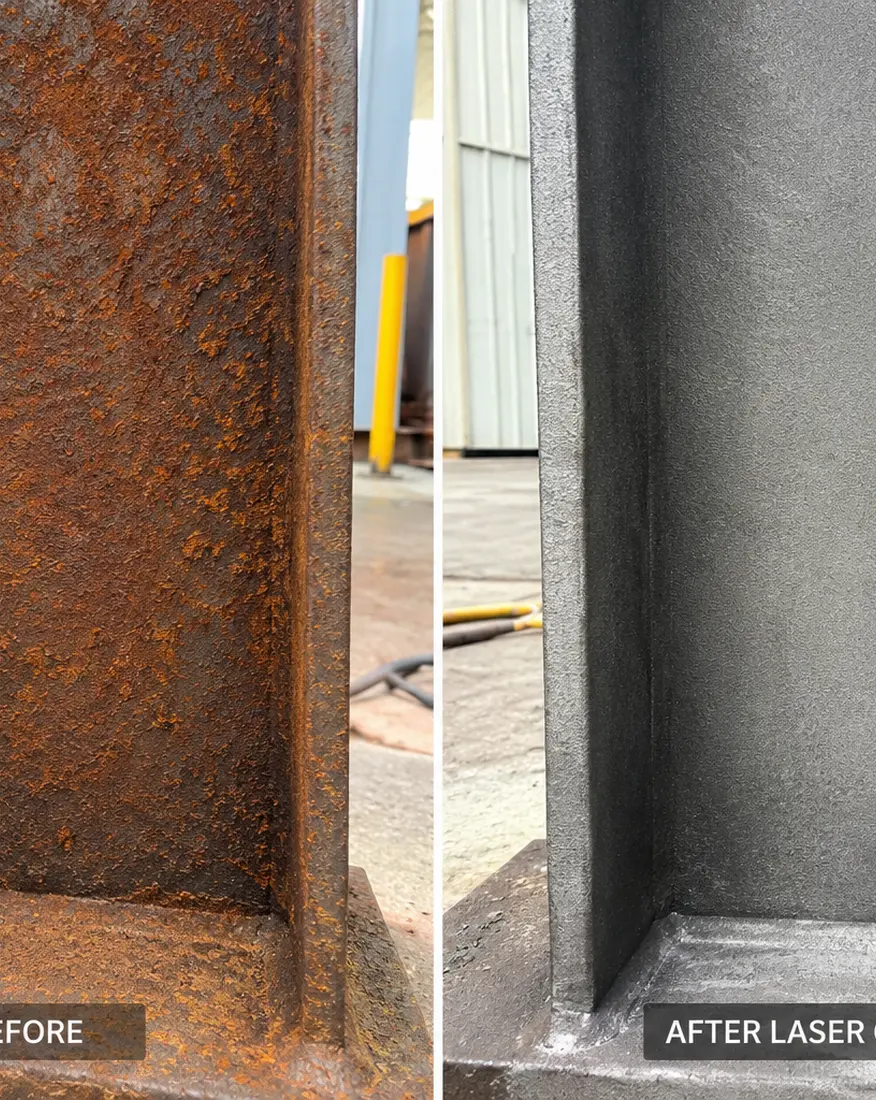
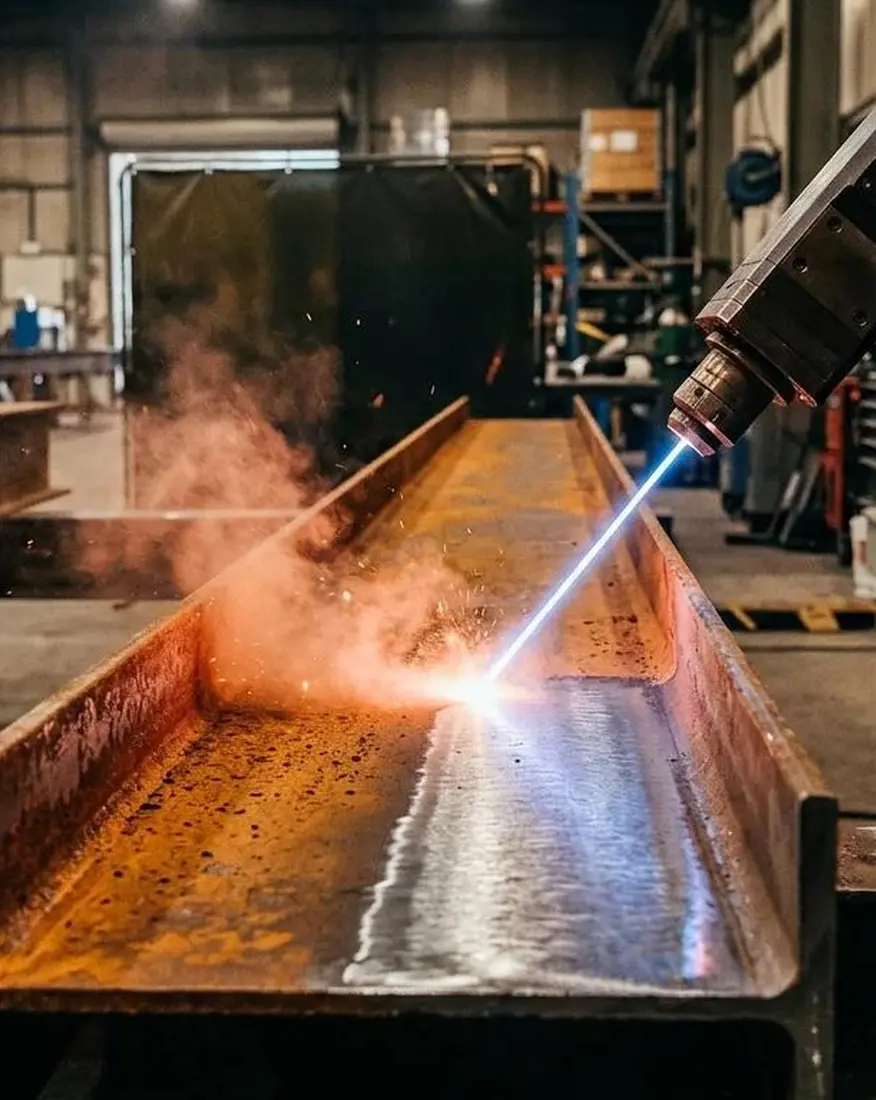
BlastOff used industrial laser cleaning to precisely target the corroded areas of the structural steel, without abrasive media, water or chemical strippers that would have needed wider containment. This allowed the work to proceed above the active warehouse floor with minimal masking and limited downtime for the business below. Fresh protective coatings were applied immediately after cleaning, sealing the steel before flash rust could develop on the newly exposed metal.
The Outcome
Corrosion on the East Tamaki warehouse steel was arrested and protective coatings were renewed, with the business continuing to operate underneath the work throughout. The immediate recoating after laser cleaning protected the steel before flash rust could take hold, giving the client a treated structure without interruption to the warehouse floor beneath it.
Keeping the Floor Running While the Roof Steel Gets Fixed Above It in East Tamaki
At a fabricator’s warehouse in East Tamaki, Auckland, corrosion needed to be stopped on the structural steel, but the operation running on the warehouse floor beneath the work area could not be paused to accommodate the repair. Any method that relied on extensive masking, wet processes or an extended shutdown risked interrupting the business below, so the corrosion had to be dealt with in a way that fitted around continuing operations rather than stopping them.
BlastOff used industrial laser cleaning to precisely target the corroded areas of the steel, without abrasive media, water or chemical strippers that would have called for wider containment across the floor below. That allowed the work to proceed above the active warehouse with minimal masking and limited downtime for the operation underneath. Fresh protective coatings were applied immediately after cleaning, sealing the steel before flash rust could develop on the newly exposed metal.
Corrosion on the East Tamaki steel was arrested and the protective coating renewed, with the business continuing to run underneath the work throughout.
For warehouse and fabrication site owners facing similar corrosion overhead, the lesson worth taking is that the treatment method needs to be chosen around what the floor below can tolerate, not just what removes rust fastest. Where a full shutdown isn’t an option, a precise, low-mess process paired with prompt recoating keeps the corrosion from returning while the rest of the operation carries on as normal, which is worth factoring into any scoping conversation before work begins. Overhead steelwork above a live floor also raises practical questions around what falls during the work, so masking and clean-up need to be planned around the operation below rather than treated as an afterthought. Fabricators and warehouse owners with similar corrosion above an active floor should ask what containment is realistically achievable without stopping work, and how soon the exposed steel can be coated once cleaned.
Testimonials
Project Images
Clients value our reliability, communication, and the quality of our work.
Posted on GoogleTrustindex verifies that the original source of the review is Google. Damian came promptly, explained the process clearly and gave us a quote. The work was done professionally and Damian was available and easily contactable throughout. His team were great to deal with and completed the internal waterproofing of our garage and rumpus room. We were very happy with the result. N BrightPosted on GoogleTrustindex verifies that the original source of the review is Google. Awesome work by Blastoff Solutions. Damien was a pleasure to deal with. Got back promptly to any queries and questions. Offering both a cost effective and practical solution to our needs. Work carried out to a high standard. Highly recommend.Posted on GoogleTrustindex verifies that the original source of the review is Google. Damian is a good communicator and the job was done to a good standard by his team. Thank you.Posted on GoogleTrustindex verifies that the original source of the review is Google. Our rental property is concrete block unit and we had leakage from one of the wall of lounge. Danial of this company visited and and gave satisfying answers to my questions and after accepting the quote the work was done to my satisfaction.Posted on GoogleTrustindex verifies that the original source of the review is Google. Good communication and did a great job. Estimated cost was very accurate.Posted on GoogleTrustindex verifies that the original source of the review is Google. Coming to the rescue, getting the job done in time! With amazing results! Very impressed, thank youPosted on GoogleTrustindex verifies that the original source of the review is Google. My deck looks like new again, thanks to Blastoff Washing team!Verified by TrustindexTrustindex verified badge is the Universal Symbol of Trust. Only the greatest companies can get the verified badge who has a review score above 4.5, based on customer reviews over the past 12 months. Read more
Ready to get started?
Planning crane or port maintenance? Talk to BlastOff.