The Civic Building
Concrete Etching, Auckland CBD
LOCATION
SERVICE
The Challenge
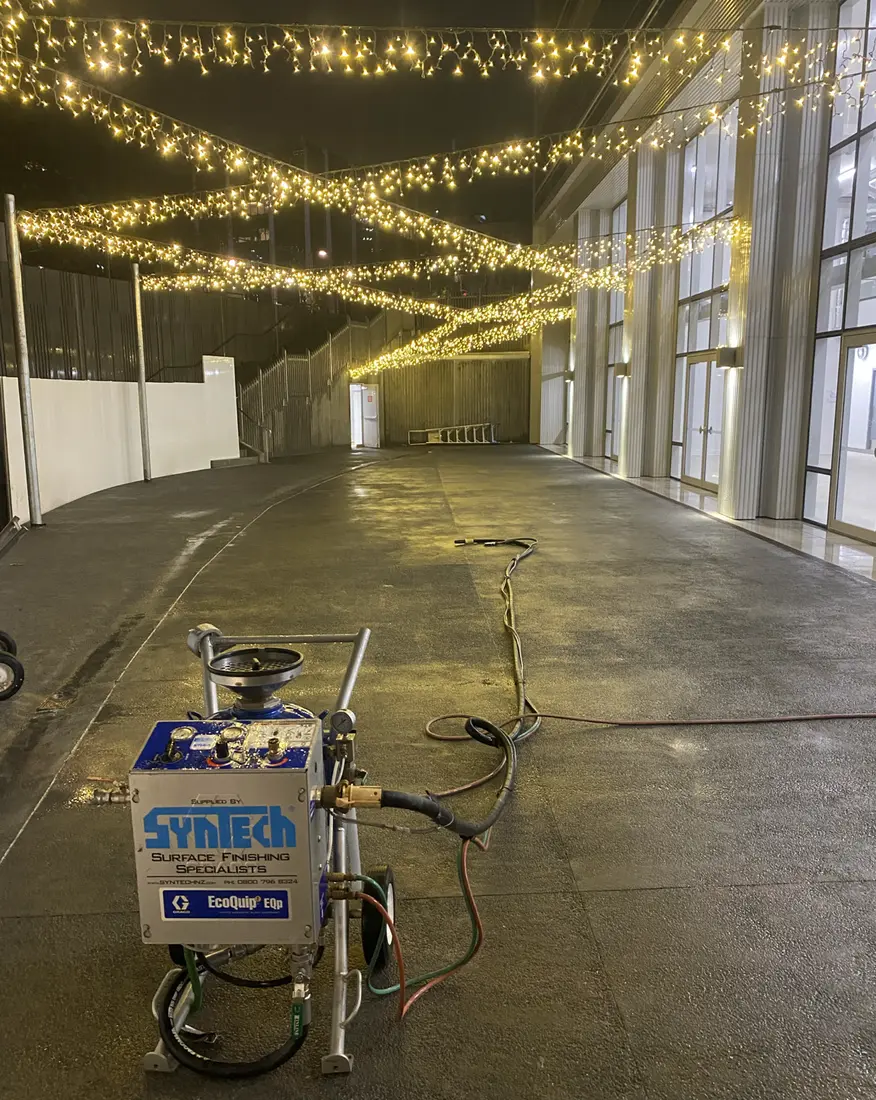
The remediation programme called for the existing concrete to be etched back until the aggregate was fully exposed, producing a clean, uniform surface across the treated areas. Delivering that consistent result mattered because the following trade needed a dependable substrate to work from, and the work had to be carried out within the constraints of an active CBD construction site.
Our Approach
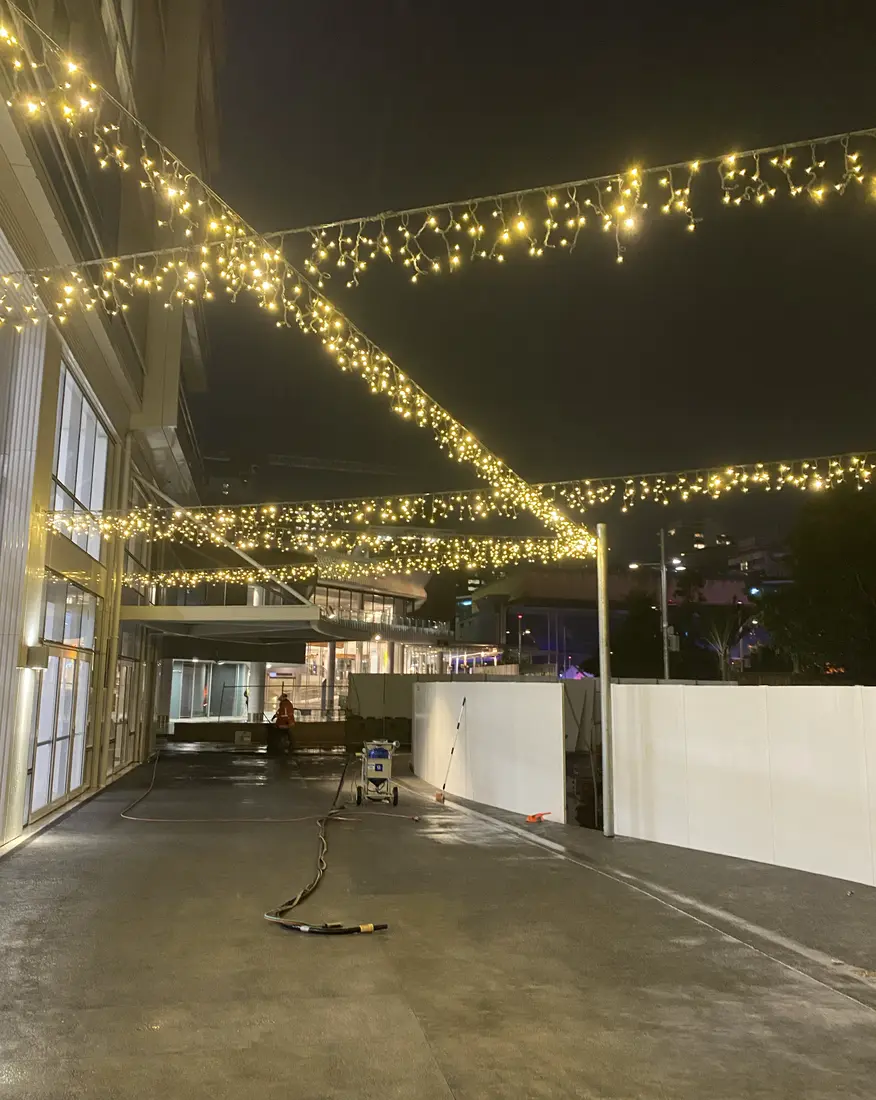
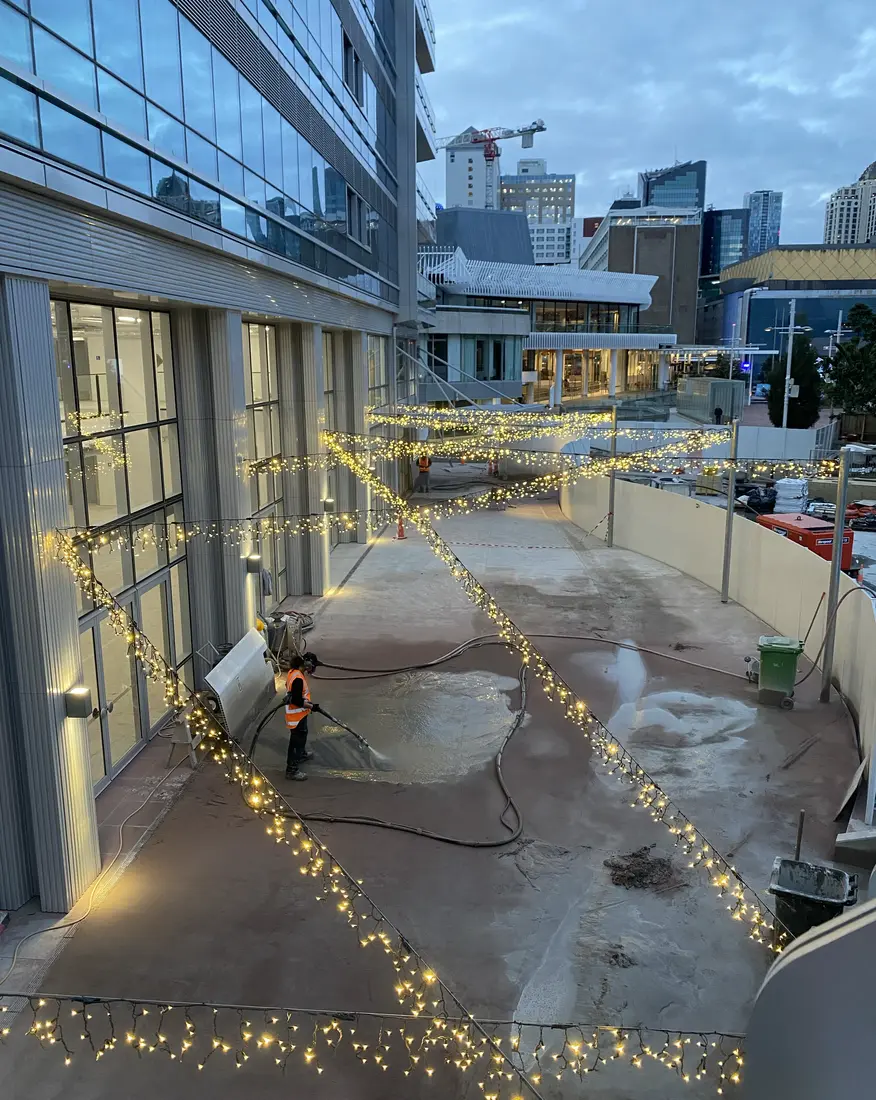
BlastOff used controlled wet abrasive blasting to etch the concrete surface, a method suited to achieving even aggregate exposure while containing dust and debris on a live construction site. Full containment was maintained throughout the process, and each section of the treated concrete was checked and verified against the required finish before it was handed over, ensuring consistency across the whole specified area ahead of the next stage of remediation.
The Outcome
The concrete was etched to a consistent, fully exposed aggregate finish across the specified areas, giving the main contractor a substrate ready for the next trade. The work was completed on programme with no rework required, supporting the wider remediation programme running on the live CBD site.
Etching to a Standard: Exposing Consistent Aggregate on a Live CBD Site at The Civic Building
On a live construction site in the middle of Auckland’s CBD, the remediation programme at The Civic Building depended on something that sounds simple but rarely is in practice: concrete etched back to a consistent, fully exposed aggregate finish across every specified area. Concrete does not always weather, cure or age evenly across a large structure, so achieving that consistency needed a controlled process rather than a general clean-down, and it needed to happen without disrupting the trades and activity already running around it on a busy central-city programme.
BlastOff used controlled wet abrasive blasting to etch the surface, a method suited to producing even aggregate exposure while keeping dust and debris contained on an active site. Full containment was maintained throughout, and rather than treating the job as finished once the blasting stopped, each section was checked and verified against the required finish before being handed over. That verification step is what turned a blasting job into a remediation input the next trade could actually rely on.
The concrete came out etched to a uniform, fully exposed aggregate profile across the treated areas, handed to the main contractor on programme and with no rework required, feeding directly into the wider remediation programme underway at the building.
For other main contractors and remediation teams working on central-city sites, the practical takeaway is that aggregate exposure is not a cosmetic finish, it is a substrate specification, and it needs the same section-by-section verification a structural trade would expect. A comparable scoping conversation should cover how consistency will be checked across the treated areas, how containment will be managed around other trades on site, and what tolerance the following stage needs from the finished profile before concrete sandblasting work begins.
Testimonials
Project Images
Clients value our reliability, communication, and the quality of our work.
Posted on GoogleTrustindex verifies that the original source of the review is Google. Damian came promptly, explained the process clearly and gave us a quote. The work was done professionally and Damian was available and easily contactable throughout. His team were great to deal with and completed the internal waterproofing of our garage and rumpus room. We were very happy with the result. N BrightPosted on GoogleTrustindex verifies that the original source of the review is Google. Awesome work by Blastoff Solutions. Damien was a pleasure to deal with. Got back promptly to any queries and questions. Offering both a cost effective and practical solution to our needs. Work carried out to a high standard. Highly recommend.Posted on GoogleTrustindex verifies that the original source of the review is Google. Damian is a good communicator and the job was done to a good standard by his team. Thank you.Posted on GoogleTrustindex verifies that the original source of the review is Google. Our rental property is concrete block unit and we had leakage from one of the wall of lounge. Danial of this company visited and and gave satisfying answers to my questions and after accepting the quote the work was done to my satisfaction.Posted on GoogleTrustindex verifies that the original source of the review is Google. Good communication and did a great job. Estimated cost was very accurate.Posted on GoogleTrustindex verifies that the original source of the review is Google. Coming to the rescue, getting the job done in time! With amazing results! Very impressed, thank youPosted on GoogleTrustindex verifies that the original source of the review is Google. My deck looks like new again, thanks to Blastoff Washing team!Verified by TrustindexTrustindex verified badge is the Universal Symbol of Trust. Only the greatest companies can get the verified badge who has a review score above 4.5, based on customer reviews over the past 12 months. Read more
Ready to get started?
Planning crane or port maintenance? Talk to BlastOff.