Goliath Portal Crane
Structural Steel Blast and Recoat, Otara
LOCATION
SERVICE
The Challenge
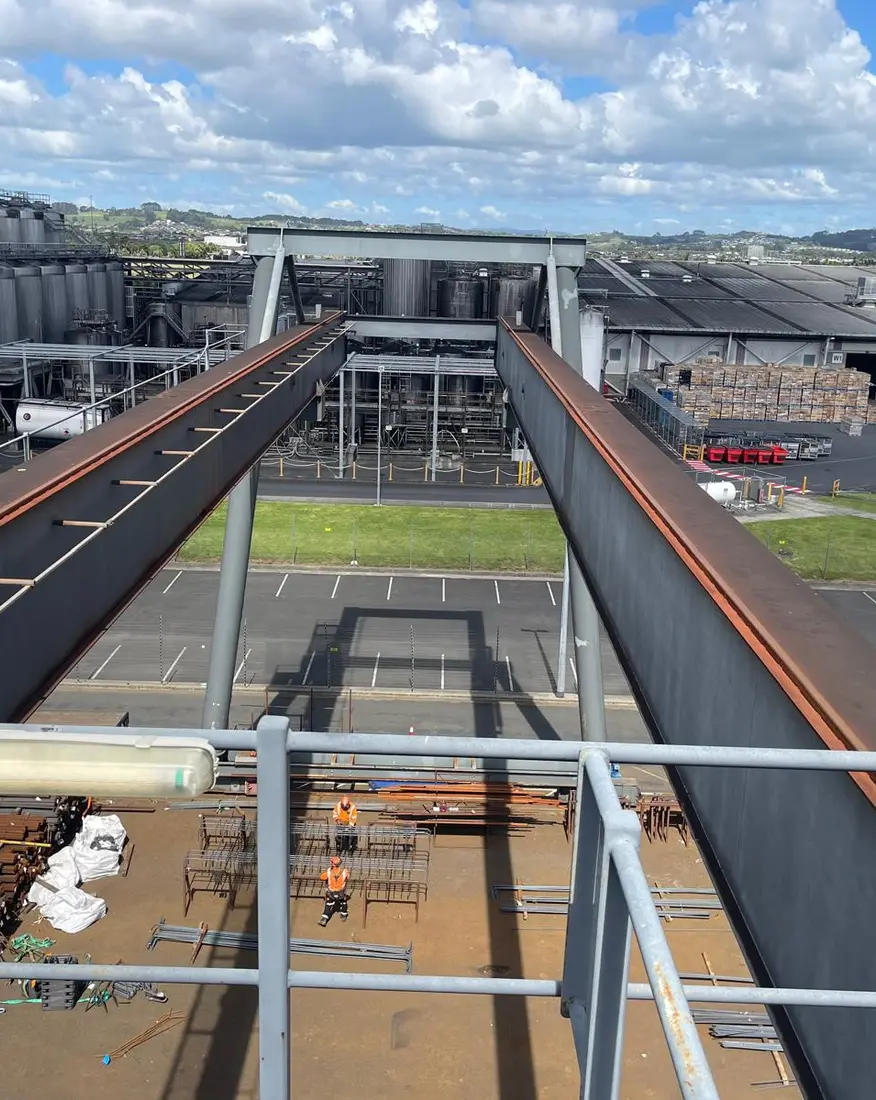
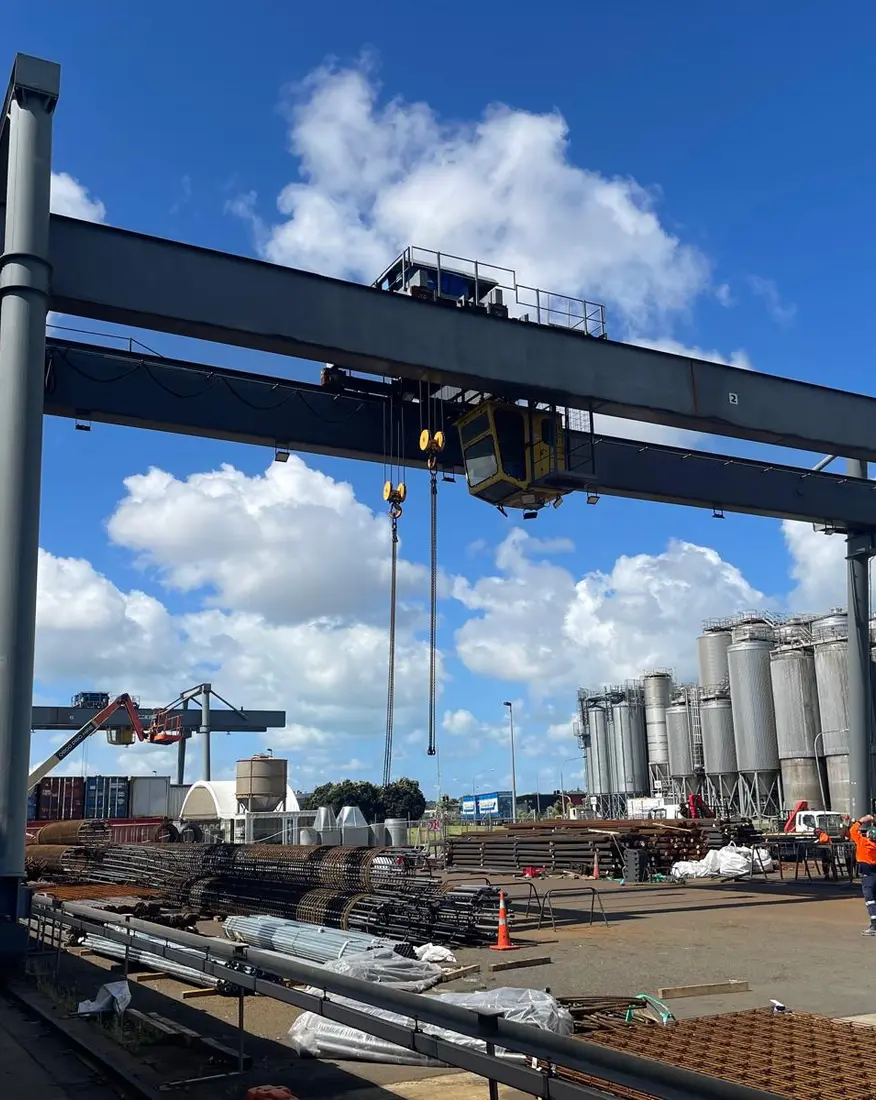
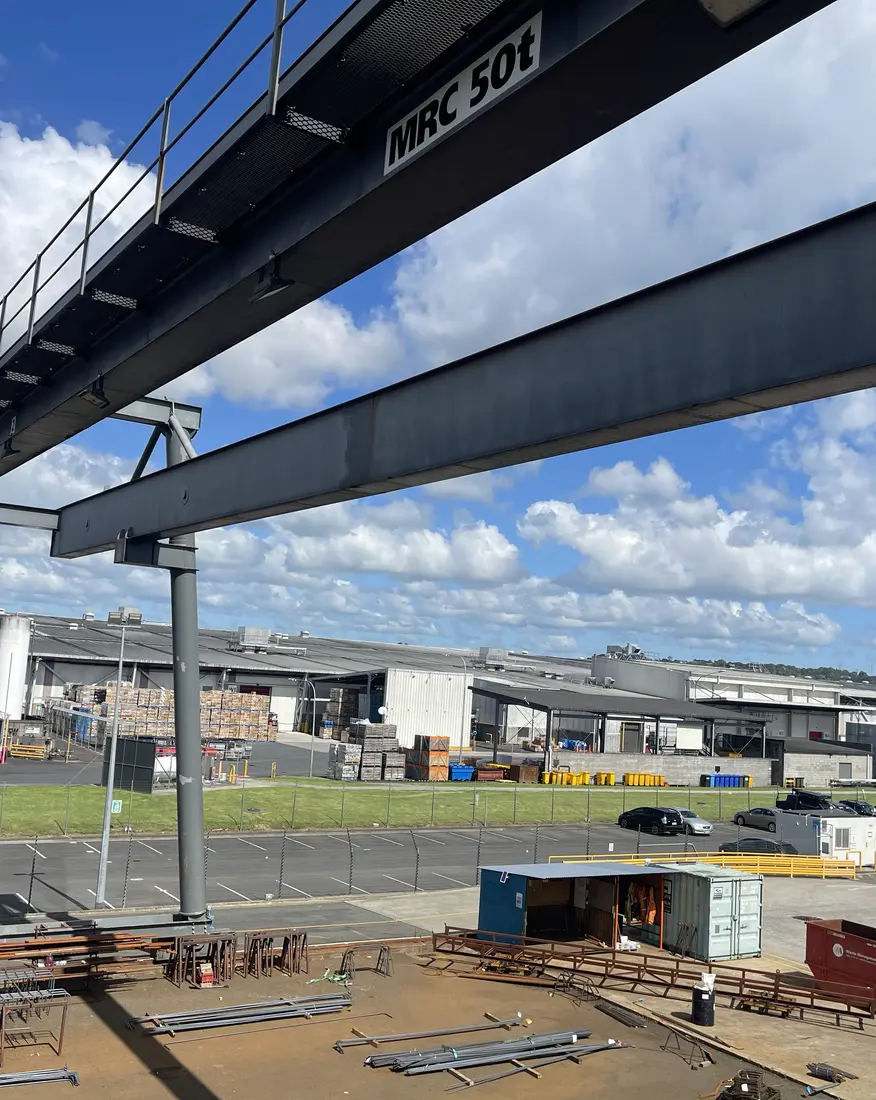
Years of coastal exposure had corroded the crane’s structural steel, leaving a substrate that needed to be stripped back before any new coating could be applied. The crane sat within a live operational site, so the sandblasting work had to proceed without shutting down the surrounding operations or allowing dust or spent media to contaminate the area below the working platform.
Our Approach
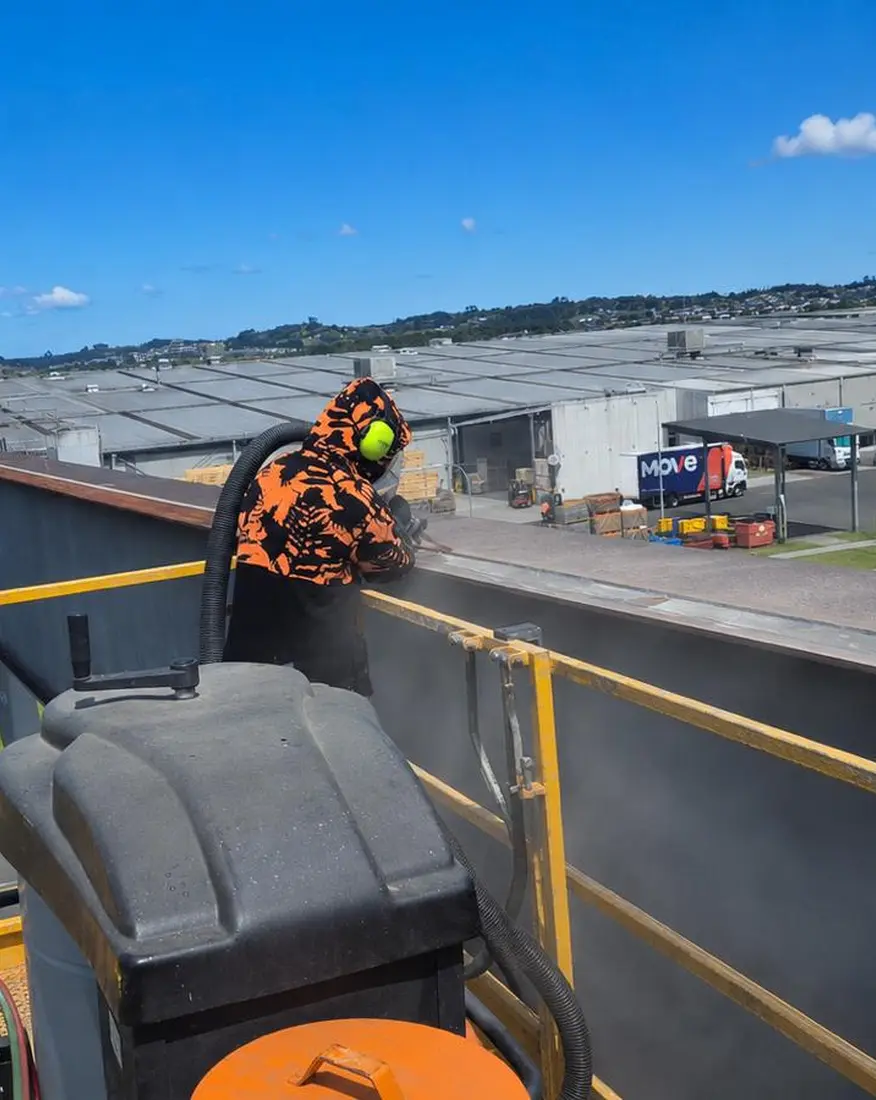
BlastOff worked thirteen metres up from scissor lifts to reach the crane’s structural steel members. Enclosed vacuum blasting was chosen for this height and setting, stripping the steel back to a sound, clean substrate while recovering dust and abrasive media as the work progressed rather than allowing it to fall to the site below. This method suited the height of the work and the need to keep operations running underneath, and it prepared the steel for the three-coat protective system applied once blasting was complete.
The Outcome
The crane’s structural steel was returned to a sound, clean condition ready for coating, with no abrasive left within the containment and no disruption to the operations running beneath the work. The prepared substrate gave the following three-coat protective system a reliable surface to bond to, and the crane was returned to service on programme.
Restoring Corrosion Protection 13 Metres Up on the Goliath Portal Crane in Otara
Thirteen metres above the ground at Wilson Group’s Otara site, the structural steel of the Goliath portal crane had spent years absorbing coastal air, and the corrosion showed it. Bringing the crane back to a sound condition meant working from scissor lifts high over a live operational yard, where shutting down surrounding activity or letting dust and spent media fall to the site below simply was not an option.
BlastOff addressed this with enclosed vacuum blasting, a method that strips steel back to a clean, sound substrate while recovering dust and abrasive media as the work progresses rather than releasing it into the air or onto the ground beneath. At height, over an active site, that containment is not a nice-to-have, it is what makes the work possible at all. Once the steel was profiled and clean, a three-coat protective system built for a severe marine environment went on, matched to the exposure the crane faces day to day at a coastal industrial site.
The result was steel returned to a sound, coatable condition with long-life corrosion protection applied and the crane back in service on programme, with no abrasive left inside the containment.
Other owners of cranes, gantries or elevated steelwork in coastal or industrial settings face the same underlying issue: corrosion rarely stays confined to what is visible from the ground, and access and containment often dictate the method as much as the steel condition does. A proper scoping conversation should cover working height, whether the site can keep operating during preparation, and how dust and media will be recovered before commercial sandblasting even begins, so the coating system that follows has a substrate it can actually rely on.
Testimonials
Project Images
Clients value our reliability, communication, and the quality of our work.
Posted on GoogleTrustindex verifies that the original source of the review is Google. Damian came promptly, explained the process clearly and gave us a quote. The work was done professionally and Damian was available and easily contactable throughout. His team were great to deal with and completed the internal waterproofing of our garage and rumpus room. We were very happy with the result. N BrightPosted on GoogleTrustindex verifies that the original source of the review is Google. Awesome work by Blastoff Solutions. Damien was a pleasure to deal with. Got back promptly to any queries and questions. Offering both a cost effective and practical solution to our needs. Work carried out to a high standard. Highly recommend.Posted on GoogleTrustindex verifies that the original source of the review is Google. Damian is a good communicator and the job was done to a good standard by his team. Thank you.Posted on GoogleTrustindex verifies that the original source of the review is Google. Our rental property is concrete block unit and we had leakage from one of the wall of lounge. Danial of this company visited and and gave satisfying answers to my questions and after accepting the quote the work was done to my satisfaction.Posted on GoogleTrustindex verifies that the original source of the review is Google. Good communication and did a great job. Estimated cost was very accurate.Posted on GoogleTrustindex verifies that the original source of the review is Google. Coming to the rescue, getting the job done in time! With amazing results! Very impressed, thank youPosted on GoogleTrustindex verifies that the original source of the review is Google. My deck looks like new again, thanks to Blastoff Washing team!Verified by TrustindexTrustindex verified badge is the Universal Symbol of Trust. Only the greatest companies can get the verified badge who has a review score above 4.5, based on customer reviews over the past 12 months. Read more
Ready to get started?
Planning crane or port maintenance? Talk to BlastOff.