Whangārei Boys' High School
Concrete Etching and Stencilling
LOCATION
SERVICE
The Challenge
The architect’s design called for a pattern that was permanently part of the concrete rather than painted onto it, so that the finish would not wear away under foot traffic and weather over time. This meant the stencilling had to be set out and blasted accurately against the supplied drawings, with no scope to correct visible errors once the concrete had been treated.
Our Approach
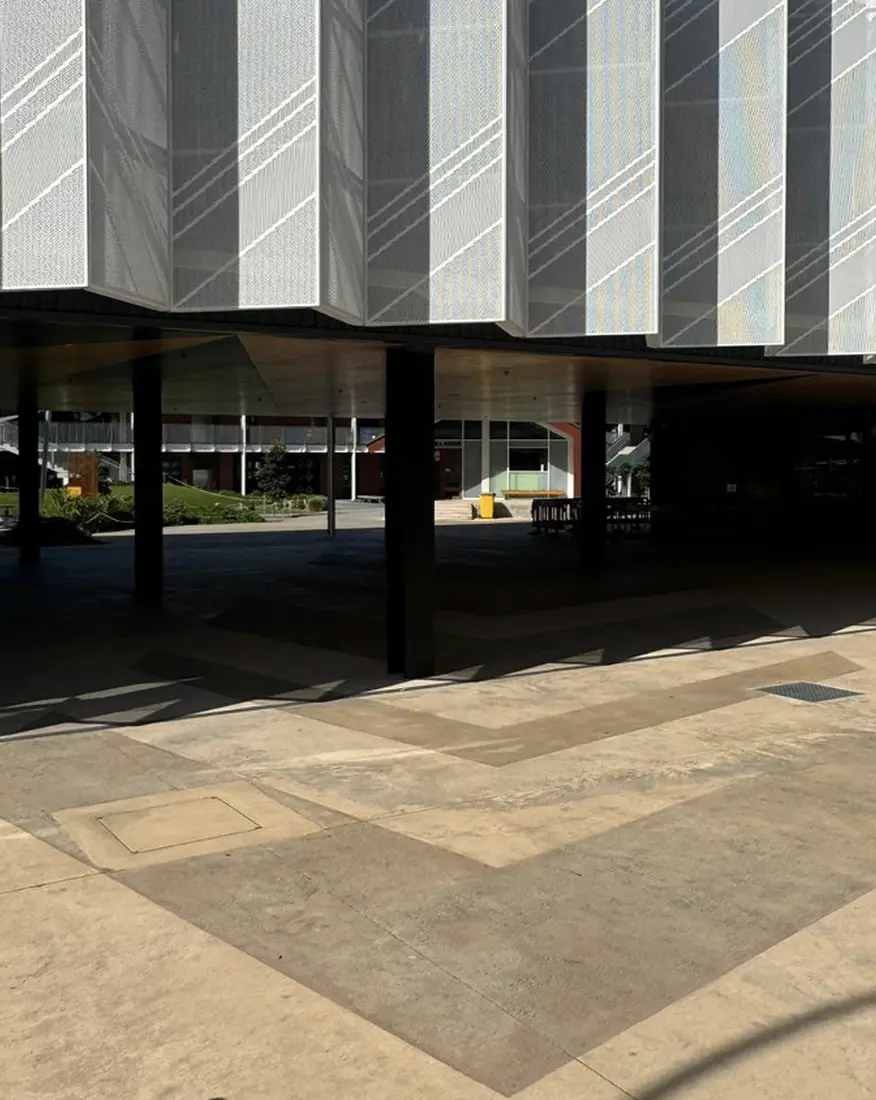
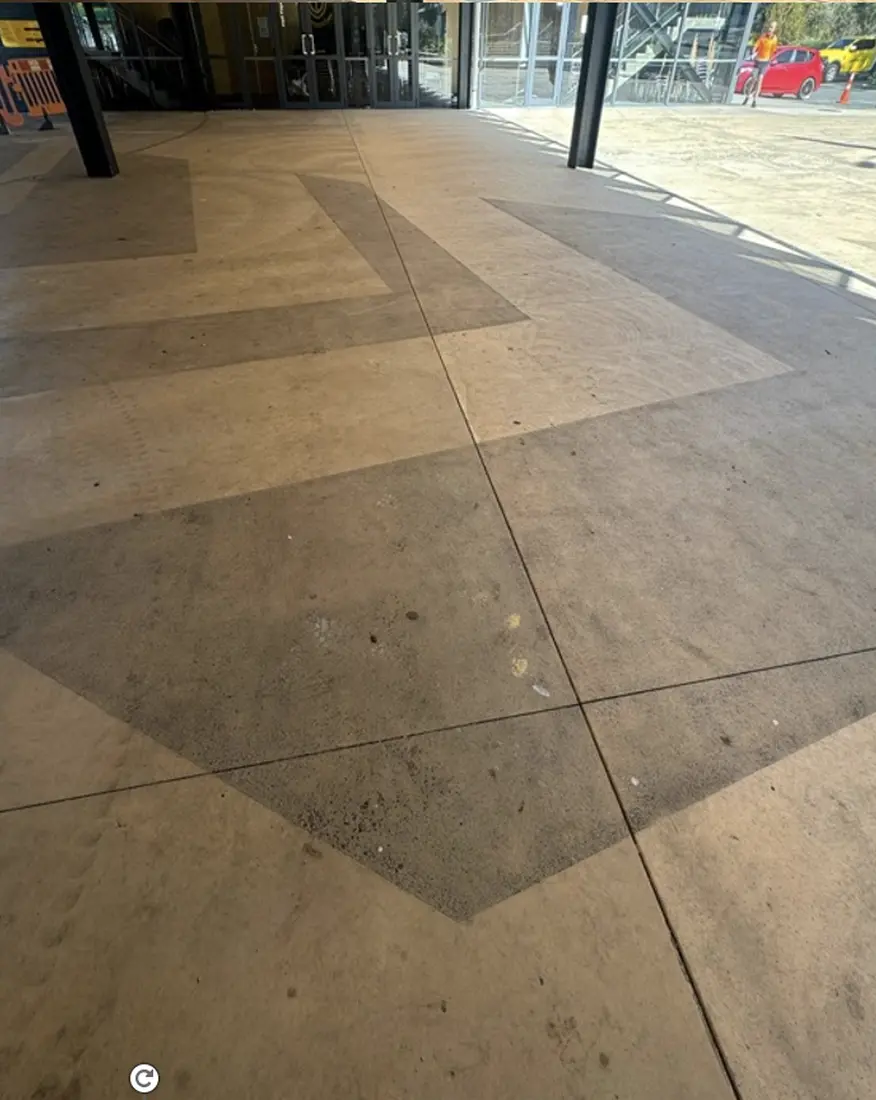
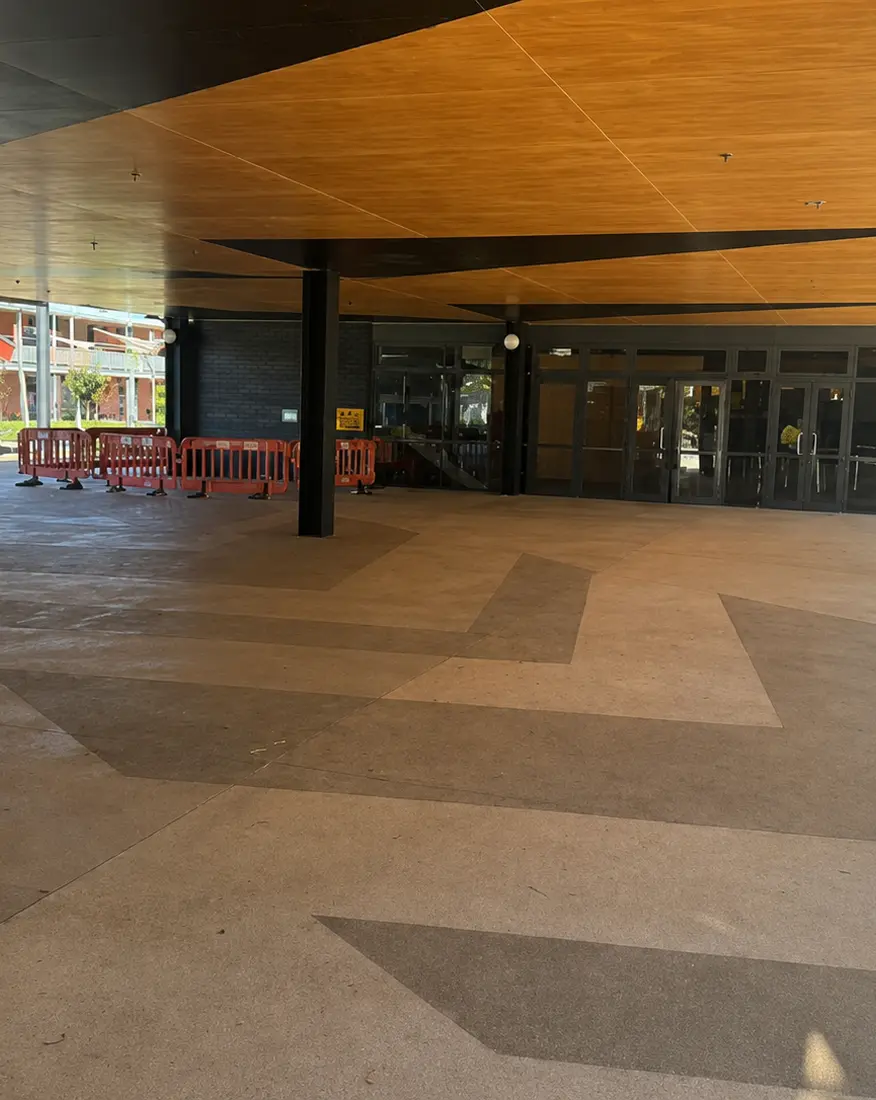
BlastOff set out and masked the design against the architect’s drawings before sandblasting the stencil into the concrete. Each panel was checked against the drawings before the masking was removed, so the pattern stayed accurate across the full area. The blasting created a contrasting texture between the treated and untreated concrete, and that same texture also improves slip resistance underfoot in the finished areas.
The Outcome
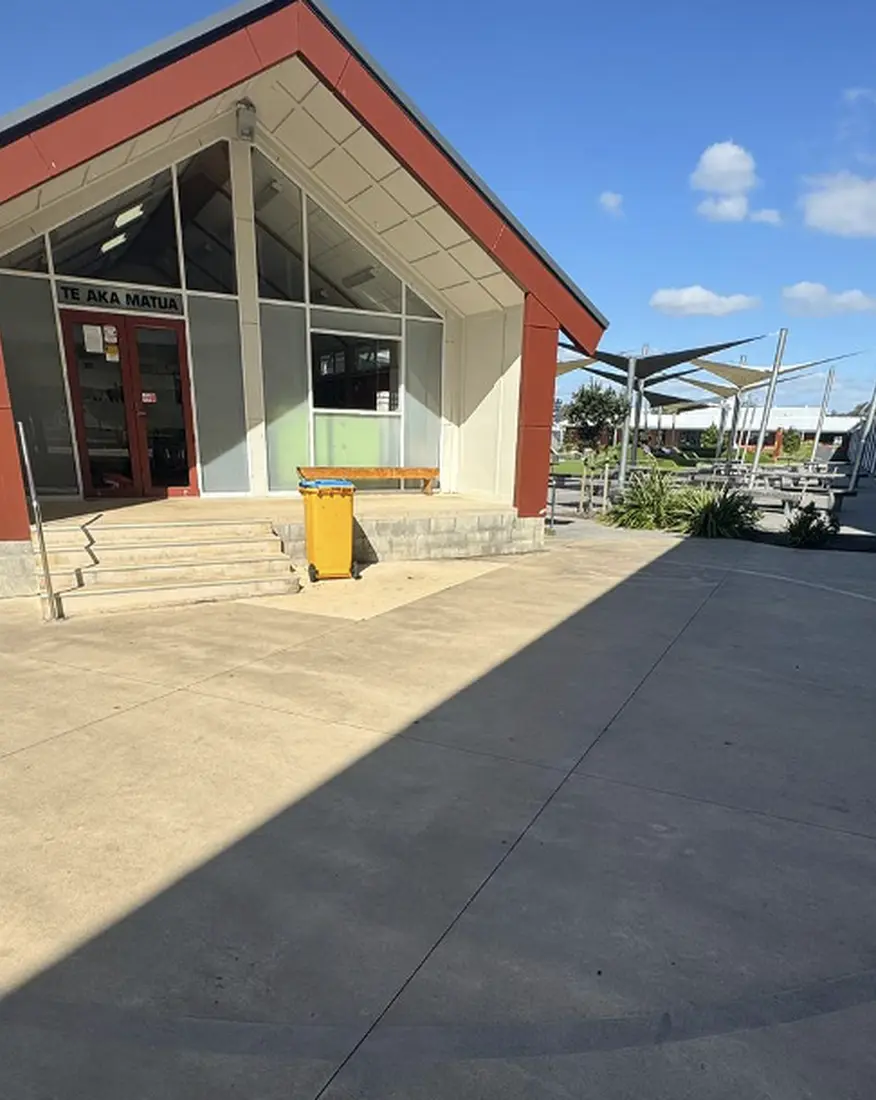
Whangarei Boys’ High School received a permanent stencilled pattern sandblasted directly into the concrete, matching the architect’s design across every panel. Because the detailing is part of the concrete rather than an applied finish, it does not rely on paint or coating to stay visible, and the textured surface also provides slip resistance where students walk.
Cutting a Permanent Pattern Into the Concrete at Whangarei Boys' High School
Whangarei Boys’ High School wanted architectural detailing that would not fade, peel or need repainting over time, and the solution the architect specified was to cut the design directly into the concrete rather than apply it as a surface finish. Painted graphics wear under foot traffic and weathering, and on a school site with constant use, that wear shows quickly.
BlastOff carried out the work using concrete stencilling, setting out and masking the pattern against the architect’s drawings before sandblasting the design into the concrete. Every panel was checked against the drawings before the masking came off, since there was no scope to correct visible errors once the concrete had been blasted. The finished pattern reads as a contrast in texture between the treated and untreated concrete, and because that same blasting process roughens the surface, the stencilling also improves slip resistance underfoot in the areas students walk through daily.
For schools, councils and property owners considering similar architectural detailing, the key advantage over painted graphics is that the finish is part of the substrate itself, so there is nothing to maintain beyond the concrete. That makes it well suited to high-traffic public and education sites where recoating cycles are impractical or costly. A scoping conversation for comparable work should cover the accuracy of the supplied drawings, the condition of the existing concrete, and how the depth of blasting will affect both the visual contrast and the underfoot texture, since getting that balance right is what determines whether the finished pattern reads clearly and performs safely for years to come without any applied coating standing between the design and the weather. A trial panel is a sensible step before committing to a full-scale design, giving the school and the architect a chance to confirm the finished contrast and grip firsthand.
Testimonials
Project Images
Clients value our reliability, communication, and the quality of our work.
Posted on GoogleTrustindex verifies that the original source of the review is Google. Damian came promptly, explained the process clearly and gave us a quote. The work was done professionally and Damian was available and easily contactable throughout. His team were great to deal with and completed the internal waterproofing of our garage and rumpus room. We were very happy with the result. N BrightPosted on GoogleTrustindex verifies that the original source of the review is Google. Awesome work by Blastoff Solutions. Damien was a pleasure to deal with. Got back promptly to any queries and questions. Offering both a cost effective and practical solution to our needs. Work carried out to a high standard. Highly recommend.Posted on GoogleTrustindex verifies that the original source of the review is Google. Damian is a good communicator and the job was done to a good standard by his team. Thank you.Posted on GoogleTrustindex verifies that the original source of the review is Google. Our rental property is concrete block unit and we had leakage from one of the wall of lounge. Danial of this company visited and and gave satisfying answers to my questions and after accepting the quote the work was done to my satisfaction.Posted on GoogleTrustindex verifies that the original source of the review is Google. Good communication and did a great job. Estimated cost was very accurate.Posted on GoogleTrustindex verifies that the original source of the review is Google. Coming to the rescue, getting the job done in time! With amazing results! Very impressed, thank youPosted on GoogleTrustindex verifies that the original source of the review is Google. My deck looks like new again, thanks to Blastoff Washing team!Verified by TrustindexTrustindex verified badge is the Universal Symbol of Trust. Only the greatest companies can get the verified badge who has a review score above 4.5, based on customer reviews over the past 12 months. Read more
Ready to get started?
Planning crane or port maintenance? Talk to BlastOff.